Are you If not, could you forward this site to this person? |
|
 |
infomore |
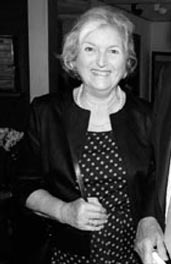
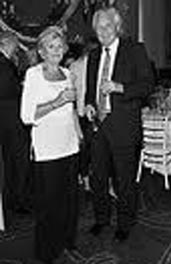
I have done this site especially for Lady Anne Heseltine |
Lady Anne is wife of Lord Heseltine, British businessman, Conservative politician and patron of the Tory Reform Group).
 |
 |
 |
Sorry for my poor english translation.
Michael Ray Dibdin Heseltine, Baron Heseltine, born March 21, 1933 in Swansea, is a former politician and businessman, member of the British Conservative Party.
After studying at Oxford University, where he studied philosophy, politics and economics (PPE program), he started in business and quickly became one of the richest people in the UK, then A key conservative figures of the years 1970 to 1990, and a leading pro-Europeans in his party. He was a member of Parliament from 1966 to 2001, first for the constituency of Tavistock, Devon, then to that of Henley, in Oxfordshire.
Secretary of Defense in the 1980s, he left the firm after a dispute with Prime Minister Margaret Thatcher, who was on the future of the defense industry (Westland). He accused the Prime Minister an extreme Euroscepticism, he became one of its most determined opponents and a key architect of its downfall in 1990, causing the election of the Leader of the Conservative Party, which led to Margaret Thatcher resign. He was then Secretary for the Environment, Secretary for Industry and Deputy Prime Minister John Major's cabinet. It has repeatedly been in position to become prime minister.
He left active politics in 2001 while continuing to speak out regularly on public affairs, and was made a life peer with the title "Baron Heseltine, of Thenford in the county of Northamptonshire."
He was made a Member of the Order of the Companions of Honour
----
-> Created for Archie Heseltine, Lady Anne Heseltine, Hermione Heseltine
Haymarket Group (or Haymarket Publishing Group) is a British publishing company. It is the leading magazine publisher in the United Kingdom, with over a hundred different titles. The group is also present in a hundred countries with publications in 23 languages, including the United States, China, Australia, France and Germany.
Haymarket Group specializes in the areas of:
* The business press: Management Today, Human Resources, Third Sector, SC Magazine, World Business, Children Now ...
* Press specializes in communication: Campaign, Marketing, Media Week, PRWeek, Revolution, Marketing Direct ...
* The automotive press: Autocar Autosport Classic and Sports Car, F1 Racing, Motorsport News, Four Four Two ...
* The computer press and Recreation: Atomic Maximum Power Computing (Australia), What Hi-Fi? Sound and Vision, Practical Caravan, The Gramophone, Stuff ...
* Press consume: publishing magazines on behalf of Michelin, Citroën, the British army, UEFA, Manchester United, Jaguar ...
French editions
In France, following the bankruptcy of Ixo Publishing, Haymarket magazines are published under license by B & B Media since 2004: Stuff, What Hi-Fi? Sound and Home Theatre, Four Four Two ...
Content Online
The group is also editor of news sites on the Internet, in the fields of medicine, economics, communication, etc..
---
-> Site for Lady Anne Heseltine, Archie Heseltine, Hermione Heseltine
The British Conservative Party is the main center-right party and right in the United Kingdom.
Origins to 1979
He is the heir of the Tories who were one of the two parliamentary groups from the seventeenth century. Deemed close to the Stuart dynasty, they favored a strong royal power and defending the interests of the landed aristocracy. Inspiring distrust of the House of Hanover, who were suspected of collusion with the previous dynasty, the kings of the eighteenth century they preferred the Whigs.
In the nineteenth century, the gradual extension of suffrage brought the Whigs as the Tories to organize themselves into political parties. The Tory caucus gathered his local associations, creating the Conservative Party. He showed himself rather protectionist opposition to free trade Liberal (from the Whigs). However, some conservatives favor free trade, seceded under the leadership of Robert Peel. In the late nineteenth century, Benjamin Disraeli created a party proudly imperialist but finally became the champion of "popular Toryism" concerned about the social question. The Conservative Party stands by while his defense of the Anglican Church (after a saying of the time, the Anglican Church, the Conservative Party gathered in prayer) and its reluctance to grant autonomy to the Ireland.
-> Created for Archie Heseltine, Lady Anne Heseltine, Hermione Heseltine
In the twentieth century the Conservative Party became clear free-market, broadening its electoral base beyond the landed aristocracy, in the direction of the bourgeoisie, small proprietors and the business community. He belonged to a coalition of National Union from 1915 to 1922, then ruled alone from 1922 to 1924 and from 1924 to 1929. He formed a new coalition of national unity, with Labor, between 1931 and 1945. He then enjoyed the prestige of Winston Churchill, hero of the nation against the Nazi threat.
Churchill statue in London
After the war, the Conservatives attempted to oppose the introduction of social security. Winston Churchill saw in the welfare state penetration of socialist ideas, he considered totalitarian and contrary to free enterprise, core value of the British model. These arguments do not forestalled the electorate to bring Labour to power in the 1945 elections. The Conservative Party returned to power from 1951 to 1964 and from 1970 to 1974, with a far more favorable to state intervention. A compromise on the welfare state and the need to cooperate with trade unions established between the two major parties. If Edward Heath, prime minister between 1970 and 1974, ushered the United Kingdom in the European Community, the country lags behind its economic rivals (France and Germany). The economic crisis that grew louder was accompanied by a political crisis. In 1974, the general strike in the mining sector paralyzed the country. Edward Heath demanded arbitration of voters by dissolving the House. After two ballots, it is a Labour majority to be freed and returned to the opposition Conservatives. This episode caused a deep trauma in the Conservative Party line hardens its policy towards a more assertive liberalism, denouncing the omnipotence that would characterize the unions. This was the origin of the election of Margaret Thatcher as party leader.
1979-2005: The Rise and Fall of the Conservative Party
In 1975, Margaret Thatcher took the reins of the Conservative party and made him take a right turn. Economically liberal, conservative on social issues, Atlanticist and partisan of a Europe of nations it conquered Downing Street in May 1979. Its restrictive monetary policy, directly inspired by monetarist ideas of the Chicago School, allowed the UK to contain inflation. She hired a parallel policy of significant reduction of public expenditure and taxation, together with deregulation and limiting the power of unions, which allowed the UK to reconnect with high growth and increased competitiveness, but a controversial social cost: unemployment of around 9% (before reduction), social tensions, etc.. With the coming to power of Ronald Reagan in 1980, Margaret Thatcher found a valuable ally who shared his conception of economics and international relations. Outside, the Iron Lady had to face in 1982 the Falklands crisis, it emerged victorious and which enabled him to win an overwhelming majority in the Commons in 1983. European matters, it showed his hostility to any hint of unresolved federal Europe in 1984 and received a discount on Britain's contribution to EU budget. It's a snap. Previously in effect, the Tories were the most ardent supporters of European integration in the UK, like Edward Heath, the architect of its entry into the Common Market.
-> Site for Lady Anne Heseltine, Archie Heseltine, Hermione Heseltine
She was reelected in 1987 with a slightly reduced majority, explained by a gain from Labour vote against the alliance "Liberal-SDP.
Margaret Thatcher was ousted from the party leadership in November 1990 due to European issues and the poll tax. It was replaced by his last Chancellor of the Exchequer, John Major. It kept the Tories in power until 1997 but he failed to halt the sharp decline recorded in each election, although he managed to get the record (14 million) in the number of votes in general elections 1992, no party has managed to match or exceed that record (by comparison, Tony Blair has raised about 13.6 and 10.7 and 9.5 respectively in 1997, 2001 and 2005). The British were tired of the government that ran for 18 consecutive years and were added to the weariness of political scandals and a serious internal division on the European Union.
In May 1997, Tony Blair, a young and dashing leader of New Labour, caused a tidal wave election for Labour. The Tories come out battered and torn these elections: they have become a party to shreds. The Conservative party is torn between his Eurosceptic and fringe fraction more European (Chris Patten or Ken Clarke, for example).
In 2001, the Labour victory was still overwhelming, the Conservatives gained some seats facing the party of Tony Blair but losing to the Liberal Democrats. Moreover, this election enjoyed a record abstention (nearly 40%) and votes for the Tories chutèrent nearly 10 million in 1997 to 8,000,000 in 2001.
In 2005, the Conservative Party nibbled some seats (33) in the Commons at the general election, but remained in opposition because of its inability to formulate a credible moderate and capable of attracting high middle class. Tony Blair remained in office while the Liberal Democrats (Lib Dem) sought to establish itself as the true opposition to Labour. Between 1997 and 2005, the Tories éreintèrent three successive leaders: William Hague (June 1997-2001), Iain Duncan Smith (2001-November 2003) and Michael Howard (November 2003-December 2005). This allowed his party to win seats thirty in 2005, but this improved representation of the Tories in the Commons is likely due more to the shortness of the Blair government to proposals very right-wing Tories.
-> Site for Lady Anne Heseltine, Archie Heseltine, Hermione Heseltine
Wishing to take advantage of the declining popularity of the Blair government, the new Conservative Party leader David Cameron is trying to rejuvenate the image and "refocus" its political line. This allowed his party to win seats thirty in 2005 and five years later, May 11, 2010, he was appointed prime minister after his victory on the elections, the head of a coalition government with the Lib Dem .
Brief sociology Conservative Party
The Conservative Party in December 2005 has nearly 250,000 members. It occurs almost exclusively in England and particularly in rural areas. The reconquest of the country's major cities, Wales and Scotland where he has only one member is a challenge for its leaders. Conservative activists are mostly older white men. Attract young people, women and ethnic minorities also appears therefore as a priority for the Tory leadership. The designation of the young David Cameron to head Dec. 6, 2005 may be the beginning of the reconquest of the Tory country.
Political Platform of Conservatives
Economically, the Conservative Party is a liberal: a supporter of limited government spending, reduced taxation, a tight monetary policy and trade positions of free trade. That George Osborne (34) who is the Shadow Chancellor of the Exchequer of the Tories in December 2005. Very close to David Cameron, he is a moderate within the Conservative Party and intends, if returned to power, higher public spending to improve public services (education, NHS, police, transportation), this increase must remain lower GDP growth, contrary to the policy pursued since 2001 by Labor.
Socially, the Conservative Party remains fundamentally hostile to unions and regulations inhibiting free enterprise and dynamism of the labor market. But, again, a trend seems to emerge with the arrival at the helm of David Cameron, mindful of the policy for the disabled, the child protection and family support. David Cameron is also very sensitive to educational issues. Former representative of the Shadow Cabinet for Education, he announced December 7, 2005 its intention to support the Labour government's plans to reform secondary education by granting more autonomy and resources to schools. Finally, the Conservatives are in favor of a policy to fight against insecurity muscled, primarily from the strengthening of police manpower and new funds for law enforcement. Socially, the Tories are finally "compassionate conservatives."
-> Created for Archie Heseltine, Lady Anne Heseltine, Hermione Heseltine
On matters of national security, conservatives fall into the camp of the United States. In 2003, they supported the intervention by the Coalition in Iraq. David Cameron in the wake of his predecessors since Sir Winston Churchill, undoubtedly would ensure to maintain a strong "special relationship" between London and Washington, as evidenced by his willingness to bring his party of U.S. Republicans. In addition, the Conservatives favor a strong defense. Great Britain was in 2008, the second European military power (in terms of budget) and the 4th World [ref. necessary]. The Tories intend to remain so well done, especially since the terrorist attacks of July 7 London cons. William Hague, a spokesman for the party's foreign affairs and Liam Fox, his counterpart on issues of defense, are convinced Atlanticist and supporters of a strong defense for the United Kingdom.
Finally, Europe is a central topic in the United Kingdom and in the Tories. Cleavage European transcends traditional political cleavages. The Tories are no exception, even if there is a trend in recent years around the Gaullist conception of a Europe of nations, a vast economic market with no real political power and respectful of the diversity of nations with the component. David Cameron himself is Eurosceptic: he has already announced its intention to withdraw Tory MEPs from the EPP (European People's Party), the European Parliament in Strasbourg, judged too federalist and Christian Democrat.
---
-> Site for Lady Anne Heseltine, Archie Heseltine, Hermione Heseltine
Swansea (pronunciation: / swanzi /) is a coastal city of 169,000 inhabitants of South Wales. In this country, it is also known under the name Welsh Abertawe. It lies at the mouth of the little river, the Afon Tawe, hence the name Welsh. This is the second city in the region after Cardiff. A century ago, its port was specialized in the export of coal intended to steam and metallurgical products. Currently, she liaises with Marine Cork. It is the birthplace of poet Dylan Thomas and Harri Webb, director Sean Mathias and film star Catherine Zeta-Jones.
Bordered by a wide sandy bay of over 10 km long, the city has parks and gardens, cultural facilities of international standard, sports facilities and a host of stores. There is also the largest outdoor market in Wales where you can sample traditional Welsh specialties such as shells Penclawdd caught that morning and laverbread, "bara LAWR" in Welsh, seaweed concoction Marine eaten with bacon.
The Maritime Quarter is a new project to rehabilitate the docks by transforming historic buildings into architectural spaces modernized. Near the marina, there are hotels, shops and luxury apartments and the National Waterfront Museum dedicated to industrial heritage and maritime Welsh will open its doors.
The bay is also home to the Victorian resort of Mumbles. Nearby is the Gower Peninsula, the first area in Britain to have been voted natural site protected.
Countless beaches have earned a seal of quality and the view from Worm's Head at Rhossili Beach is unique.