Are you If not, could you forward this site to this person? |
|
 |
infomore |
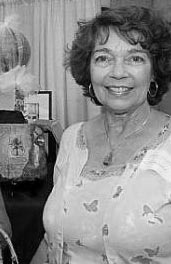
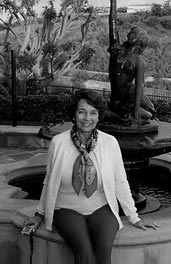
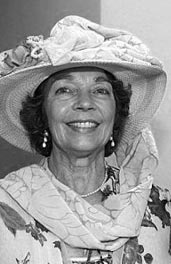
I have done this site especially for Jeanne Olenicoff |
 |
 |
 |
Sorry for my poor english translation.
A wealth manager UBS is cooperating with the police to disclose how they evaded taxes for their clients. This case has become a scandal in Switzerland. His revelations about the practices of the organization could sign the death of the bank and severely shake up the banking secrecy of the hitherto impeccable Swiss Confederation.
Bradley Birkenfeld, a U.S. wealth manager, is the center of one of the biggest scandals of tax evasion in Switzerland. Last June, agreed to plead guilty before a Florida court and cooperate with the authorities, hoping to reduce a penalty that could reach five years in prison and $ 250,000 (193,000 euros) fine. Former employee of Union des Banques Suisses (UBS), the first entity in wealth management world, is accused of helping a Russian-born American billionaire, Igor Olenicoff, to hide the treasury $ 200 million (154.4 million), thus circumventing $ 7.2 million (5.5 million) in taxes.
Still unknown in France, Bradley Birkenfeld has become a mini celebrity in all Switzerland, where their concerns are often at the opening of the news. His revelations about the practices of UBS could sign the death of the bank and severely shake up banking secrecy in the Swiss Confederation. In fact, UBS is at risk of losing their license if it appears that American took out deliberately fraudulent assemblies to help wealthy Americans hide in Switzerland part of their fortunes to the detriment of the American treasury.
For the bank, the blow could be fatal, given that 28,000 of its 81,000 employees working in the U.S.. Mark Branson, director of wealth management of the organization, presented their apologies in late July before the U.S. Senate, pledging to "take the necessary measures so that does not happen again." Opening an unprecedented gap in secret Swiss bank, UBS has offered to cooperate fully with U.S. authorities and, according to The New York Times reported the bank would already have hundreds of names to Swiss authorities.
Bradley Birkenfeld, 43 and born in the United States, met Igor Olenicoff when he began working at Barclays. Convinced him to entrust the management of part of his fortune and moved to UBS in 2001, taking with him the American millionaire. Birkenfeld was unaware that his client already had trouble with the law and the U.S. Treasury.
In 2006, Forbes magazine estimated his fortune at $ 1,600 million (1,235 million euros). Olenicoff has long claimed the opposite of the Internal Revenue Service (IRS) and ensuring that he had no involvement in the offshore company based in the Cayman Islands, Bahamas and Denmark who controlled Olen Properties. After several years of research, the U.S. Treasury was finally determined that the sole owner of Olen Properties and Sovereign Bancorp, a partnership of the Bahamas. After several corrections prosecutors, the IRS also brought to light a network of offshore companies created with the help of Bradley Birkenfeld to hide $ 200 million to the treasury. At that time the problems started to UBS.
-> Site for Jeanne Olenicoff, Natalia Olenicoff, Igor
Horrifying picture
The testimony and documents that Bradley Birkenfeld has agreed to provide Senate investigators offered a horrifying picture of the practices of one of the top banks in the world and outlines between the lines, the practices of the Swiss banking sector as a whole.
At the beginning of the decade, the U.S. created a program called Qualified Intermediary (QI) that requires financial institutions with accounts opened by U.S. residents to inform the IRS, although the undeclared accounts had much more success among American customers than declared . UBS had concealed a total of 19,000 accounts to U.S. authorities.
Helped, for example, 250 U.S. clients to open accounts on behalf of companies, offshore trusts or foundations, and to transfer its assets, including those of American origin, from his personal accounts into new accounts. The presented as accounts opened by non-Americans, whose identity was not to be disclosed to U.S. authorities "even though UBS knew that the real beneficiaries [of these legal entities] were Americans," he says with indignation the U.S. Senate.
-> Created for Igor, Natalia Olenicoff, Jeanne Olenicoff
Another serious violation of U.S. law is that the management department at UBS in Switzerland sent its employees to attract customers on American soil. With one third of censused millionaires in the world, America is obviously a must for any manager of wealth, but U.S. law prohibits foreign banks to go fishing on their land. Wealth managers in charge of Switzerland UBS United States crossed the Atlantic four to six times a year. "If I remember correctly, there were 25 people in Geneva, Zurich and 50 in 5 or 10 in Lucerne. It is a formidable force," said Bradley in the Senate.
The goals were very ambitious. In an email sent in 2007 to set his team, Martin Liechti, head of U.S. wealth management at UBS, said that "growth is the best response to ensure our future. We have gone from 4 million Swiss francs ( 2.7 million euros) per client and consultant in 2004 to 17 million (11.5 million euros) in 2006. We must hold our ambition to reach 60 million (40.8 million) per customer and con- consultant. " Each banker was set an economic objective. Birkenfeld said that his "work as a private banker was to get between 40 million and 50 million dollars a year (between 30.9 million and 38.7 million euros)."
UBS knew that their bankers were timely in violation of U.S. law and an internal document dated 2002 explicitly recommended them "not to use messaging, emails or faxes regarding the U.S. portfolio of the customer" while in that country. Often, your cards were omitted to mention that wealth managers. And the bank was preparing them for the most extreme situations.
-> Site for Jeanne Olenicoff, Natalia Olenicoff, Igor
Notes encrypted
The Senate has had access to a document entitled Workshop on case studies relating to border crossings, which explains how to react in case of confrontation with the police or customs agents. "We have intercepted American and Canadian authorities after crossing customs. Verify your Palm and find all their meetings with clients. Fortunately, the meetings are recorded only accompanied the occasion of brief notes and does not include a name."
Some bankers moved to the United States with notes encrypted accounts of their customers. The document was sent immediately by mail to the hotel that was to house the manager of fortune during his stay in America. Once there, just had to hand-deliver information to your customer. UBS also provided its bankers about laptops called TAS, scheduled to receive highly encrypted data.
Between the credit crunch and difficulties with American justice, UBS is going through a difficult time. The closing of accounts multiply. In the second quarter, the wealth management department of the bank was faced with 15,800 million dollars (12.197 million euros) in capital outflows, although UBS's problems do not end there.
Igor Olenicoff was sentenced to pay a fine of $ 52 million (40.1 million) and last month sued UBS. The millionaire was met at Geneva in 2001, where Bradley Birkenfeld and other employees of UBS would have assured the legality of their mounts, ghost companies based in Liechtenstein. "Switzerland is still the main obstacle in the fight against tax evasion," maintained the former German Finance Minister Hans Eichel. It is urgent to exercise "more" pressure on the Confederacy, "but sometimes have the feeling that many people in the upper echelons protect it, because they have money there," he says.
---
-> Site for Jeanne Olenicoff, Natalia Olenicoff, Igor
This among U.S. billionaires published by Forbes magazine every year. Real estate mogul Igor Olenicoff, based in the United States, was one of the main clients of UBS before they become engaged, willingly or not-in traps devised by the Swiss banker Bradley Birkenfeld, on behalf of UBS.
(New York, USA). Igor Olenicoff, owner of Olen Properties, the powerful Californian real estate company rose from a building of 16 duplex in the early 1970s, is today one of the fixed names of the Forbes 400 richest Americans (the Last year was the number 236), with a net worth valued at 1,500 million dollars.
In early 2001, gave Olenicoff great deal of control over a large amount of money to a seductive banker had not heard of until a few months before the agreement, when I phone him at his office in Newport Beach. "The person on the other side said 'Hello, my name is Bradley Birkenfeld,'" he recalls.
Birkenfeld was working at that time with Barclays, and Olenicoff had 200 million dollars in the bank, in its division of the Bahamas. He had begun to move money to offshore accounts, "as security" during the financial crisis of the early 1990.
Olenicoff says that after presenting, Birkenfeld said he had inside information about some changes in Barclays Bahamas that could endanger their accounts. Birkenfeld was traveling to California for other businesses, and would be happy to explain more Olenicoff in person.
When Birkenfeld arrived in Newport, Olenicoff told that Barclays was going to close their business in the Bahamas, and that information was not yet public, so that the millionaire would have to move your money site. In addition, he said he was going to leave Barclays and joining UBS, and suggested that Olenicoff entrusted its accounts in your new bank.
Olenicoff and his son, Andrei, recently flew to Geneva to hear more. They went to an office with extensive security but very discrete, identified only by a small plaque with the name of the bank. A guard searched his bags, punched a code into an elevator and were escorted inside.
-> Created for Igor, Natalia Olenicoff, Jeanne Olenicoff
Birkenfeld left them with a senior UBS banker who led them to look beyond the safe ground of the entity. Olenicoff agreed after opening an account for 200 million dollars (155 million euros), with the money that was "like family savings."
Birkenfeld became the account executive Olenicoff. UBS international bankers did business in person, by minimizing the correspondence not to leave tracks, so Birkenfeld traveled regularly to the U.S..
Olenicoff says that eventually gave the bankers and brokers at UBS total control over their cash and securities accounts, provided that the money would be invested on behalf of corporate funds abroad, and not your own. They created several "structures" in Liechtenstein and Denmark for the purpose. Olenicoff said he was told that the money from these accounts would not have to pay taxes until you enter the U.S..
-> Site for Jeanne Olenicoff, Natalia Olenicoff, Igor
Some fiscal relaxation will mean a great relief. At the beginning of 1994 and subsequent years, the IRS (U.S. tax agency) had audited endlessly Olen Properties, insisting at one point the company had hidden $ 330 million in one year and 148 million owed dollars in back taxes.
In an interview with GlobalPost, Olenicoff said he had never had problems with the IRS in the 25 years of existence of his company, but that the IRS had begun to audit based on allegations by a former employee. In the end, the Government reached an agreement to pay Olen $ 272,024 (210,871 euros). But the IRS case was not over.
At about 6 am one day in late May 2005, more than 30 investigators from the IRS simultaneously raided the home of Igor Olenicoff in your child and at the offices of Olen Properties. The agents took everything: computers, correspondence, emails, bank statements and a safe with documents relating to their accounts abroad.
According Olenicoff, all documents showed the name of your accounts at UBS executive, Bradley Birkenfeld. "Bradley had insisted that the documents destroyed, but I did." There were also emails exchanged between Birkenfeld and other employees of UBS and the tycoon and his son.
Shortly after learning what had happened, Birkenfeld traveled from Switzerland to California with one of his bosses at UBS Olenicoff for lunch. "They were worried about me," says the businessman, who now openly despises her former banker.
"Bradley wants us to believe that suddenly found the light and became an informer. But the truth is that I cheated, "denounces the developer, who insists that both Birkenfeld other UBS employees had always been told that his services were legal.
Olenicoff refused to cooperate with prosecutors after the raid, and their lawyers had to deal with the U.S. government for over two years. In December 2007 he pleaded guilty to failing to declare bank accounts overseas, and agreed to pay $ 52 million (40.3 million) in back taxes. He faced a sentence of three years in prison, but had to serve one day.
Olenicoff finally began to voluntarily cooperate with Justice Department lawyers in the U.S.. They had many questions to ask about a former top executive at UBS accounts named Bradley Birkenfeld.
----
-> Site for Jeanne Olenicoff, Natalia Olenicoff, Igor
The Liechtenstein affair is uncovering scandals in the world
The Spanish authorities remain very vigilant following the track of 22.1 million, belonging to Spanish citizens
The Principality of Liechtenstein came a few months ago the arena of international scandal and is in danger of being known as a haven for tax evaders distinguished and money launderers. The sixth smallest country in the world, deep in the heart of the Alps, attracting worldwide attention after a confidential informant to the German government sold the stolen information on German citizens and other nationals with accounts at financial institutions in the Centennial principality.
Far from being forgotten, the aftermath of the affair of the Principality of Liechtenstein tax still present in the world. Two new financial world bosses have been accused of tax evasion. It is a former executive of UBS AG and a financial consultant the Alpine principality, accused of advising and participating in fraudulent schemes designed to defraud the U.S. Treasury.
One of the clients, the now accused, was the famed brick Californian businessman Igor Olenicoff. The builder opened accounts in banks in Switzerland and Liechtenstein. Nothing less than $ 200 million thus escaped the control of U.S. authorities. Olenicoff was one of the key informants in Washington, in an attempt to be forgiven in part by the government. Bradley Birkenfeld, UBS AG officer and Mario Staggl, the European tax haven consultant and owner of New Haven Trust Co. Ltd, helped several entrepreneurs in this type of fraudulent practices. His clients were usually wealthy businessmen and executives from California, New York or Florida.
This news, far from unnoticed, is a clear warning in the world. Meanwhile, the Spanish authorities remain very vigilant following the track of 22.1 million, belonging to Spanish citizens who have been invested in the principality's banking system. Despite the media storm that seems to have passed, the tax police and Leviathan is a hard work to discover the pariahs of the Iberian Treasury.
---
-> Site for Jeanne Olenicoff, Natalia Olenicoff, Igor
Swiss banking secrets revealed: the shenanigans of the real estate mogul Olenicoff
Igor Olenicoff, owner of Olen Properties, the powerful Californian real estate company rose from a building of 16 duplex in the early 1970s, is today one of the fixed names of the Forbes 400 richest Americans (the Last year was the number 236), with a net worth valued at 1,500 million dollars.
In early 2001, gave Olenicoff great deal of control over a large amount of money to a seductive banker had not heard of until a few months before the agreement, when I phone him at his office in Newport Beach. "The person on the other side said 'Hello, my name is Bradley Birkenfeld,'" he recalls.
Birkenfeld was working at that time with Barclays, and Olenicoff had 200 million dollars in the bank, in its division of the Bahamas. He had begun to move money to offshore accounts, "as security" during the financial crisis of the early 1990.
Olenicoff says that after presenting, Birkenfeld said he had inside information about some changes in Barclays Bahamas that could endanger their accounts. Birkenfeld was traveling to California for other businesses, and would be happy to explain more Olenicoff in person.
When Birkenfeld arrived in Newport, Olenicoff told that Barclays was going to close their business in the Bahamas, and that information was not yet public, so that the millionaire would have to move your money site. In addition, he said he was going to leave Barclays and joining UBS, and suggested that Olenicoff entrusted its accounts in your new bank.
Olenicoff and his son, Andrei, recently flew to Geneva to hear more. They went to an office with extensive security but very discrete, identified only by a small plaque with the name of the bank. A guard searched his bags, punched a code into an elevator and were escorted inside.
Birkenfeld left them with a senior UBS banker who led them to look beyond the safe ground of the entity. Olenicoff agreed after opening an account for 200 million dollars (155 million euros), with the money that was "like family savings."
-> Site for Jeanne Olenicoff, Natalia Olenicoff, Igor
Birkenfeld became the account executive Olenicoff. UBS international bankers did business in person, by minimizing the correspondence not to leave tracks, so Birkenfeld traveled regularly to the U.S..
Olenicoff says that eventually gave the bankers and brokers at UBS total control over their cash and securities accounts, provided that the money would be invested on behalf of corporate funds abroad, and not your own. They created several "structures" in Liechtenstein and Denmark for the purpose. Olenicoff said he was told that the money from these accounts would not have to pay taxes until you enter the U.S..
Some fiscal relaxation will mean a great relief. At the beginning of 1994 and subsequent years, the IRS (U.S. tax agency) had audited endlessly Olen Properties, insisting at one point the company had hidden $ 330 million in one year and 148 million owed dollars in back taxes.
In an interview with GlobalPost, Olenicoff said he had never had problems with the IRS in the 25 years of existence of his company, but that the IRS had begun to audit based on allegations by a former employee. In the end, the Government reached an agreement to pay Olen $ 272,024 (210,871 euros). But the IRS case was not over.
At about 6 am one day in late May 2005, more than 30 investigators from the IRS simultaneously raided the home of Igor Olenicoff in your child and at the offices of Olen Properties. The agents took everything: computers, correspondence, emails, bank statements and a safe with documents relating to their accounts abroad.
According Olenicoff, all documents showed the name of your accounts at UBS executive, Bradley Birkenfeld. "Bradley had insisted that the documents destroyed, but I did." There were also emails exchanged between Birkenfeld and other employees of UBS and the tycoon and his son.
-> Site for Jeanne Olenicoff, Natalia Olenicoff, Igor
Shortly after learning what had happened, Birkenfeld traveled from Switzerland to California with one of his bosses at UBS Olenicoff for lunch. "They were worried about me," says the businessman, who now openly despises her former banker.
"Bradley wants us to believe that suddenly found the light and became an informer. But the truth is that I cheated, "denounces the developer, who insists that both Birkenfeld other UBS employees had always been told that his services were legal.
Olenicoff refused to cooperate with prosecutors after the raid, and their lawyers had to deal with the U.S. government for over two years. In December 2007 he pleaded guilty to failing to declare bank accounts overseas, and agreed to pay $ 52 million (40.3 million) in back taxes. He faced a sentence of three years in prison, but had to serve one day.
Olenicoff finally began to voluntarily cooperate with Justice Department lawyers in the U.S.. They had many questions to ask about a former top executive at UBS accounts named Bradley Birkenfeld.
-> Created for Igor, Natalia Olenicoff, Jeanne Olenicoff